The Right Whales to Love: A Good Winter for Right Whales
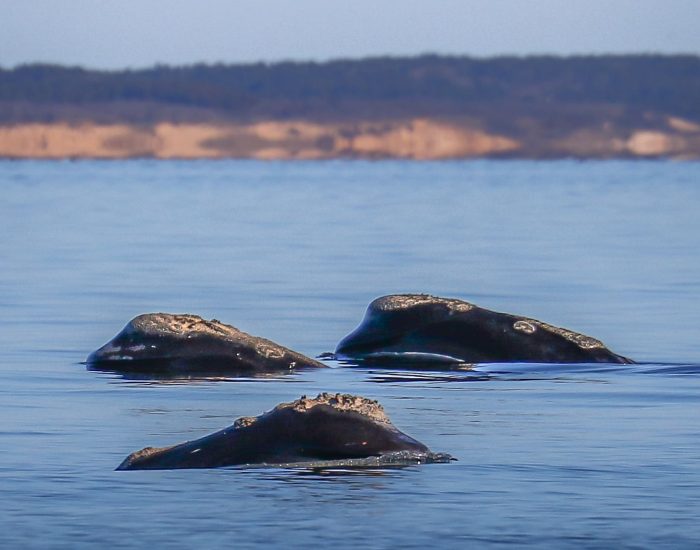

There are approximately 380 North Atlantic right whales remaining in the world today, including only about 70 reproductive females. Each year, from mid-November through mid-April, researchers along the southeastern coast of the United States take on the critical task of documenting new mothers and calves. These waters serve as the primary calving grounds for North Atlantic right whales. This past winter brought encouraging news.
A total of 23 North Atlantic right whale calves were documented, the highest number recorded in 17 years! For a critically endangered population this small, the birth of each calf is significant, representing a step toward survival for a species on the edge.
To fully understand the importance of this number, it’s important to recognize the challenges these whales face. Since 2017, more than 20% of the population has been lost during what is known as an Unusual Mortality Event, driven largely by human impacts such as vessel strikes and entanglement in fishing gear. North Atlantic right whale females typically give birth every 3 to 4 years under ideal conditions, though many are now experiencing much longer intervals, sometimes 7 to 10 years between calves. As a result, even 20 calves in a season would be considered a strong year. This winter’s total of 23 offers a hopeful sign. Already this spring, that hope is making its way north.
According to the Center for Coastal Studies, 12 of these mother and calf pairs have recently been documented in Cape Cod Bay, a reminder that coastal Massachusetts plays a critical role in the lives of these whales as they migrate and feed. These waters, especially Cape Cod Bay, serve as an essential seasonal habitat for North Atlantic right whales. We wish all right whales, especially these new mothers and calves, a safe remainder of their journey north, and a future that continues to move in the RIGHT direction.
“Fortunately, nature is amazingly resilient: places we have destroyed, given time and help, can once again support life, and endangered species can be given a second chance.” – Dr. Jane Goodall

