Gray Seal
Halichoerus grypus
Until recently, the Gray seal was a rare sighting in the waters around Gloucester, MA. Their numbers, however, have increased dramatically and they are now a common sight around the piers and wharfs of Gloucester harbor. The exact cause of this increase is unclear, but it is likely the result of the rescinding of “bounty programs” in Maine and Massachusetts which encouraged the killing of Gray seals because some believed them to be nuisance as they do compete with fishermen for resources and they occasionally damage fishing gear (especially lobster traps).
The increase in Gray seal numbers may also explain why another marine predator, the Great white shark, seems to be a more and more frequent visitor to our area. Gray seals are one of the Great white’s main prey items, so an increase in Gray seals would naturally encourage Great white sharks to venture into the waters of Massachusetts with a little more regularity.
Quick Facts & Stats
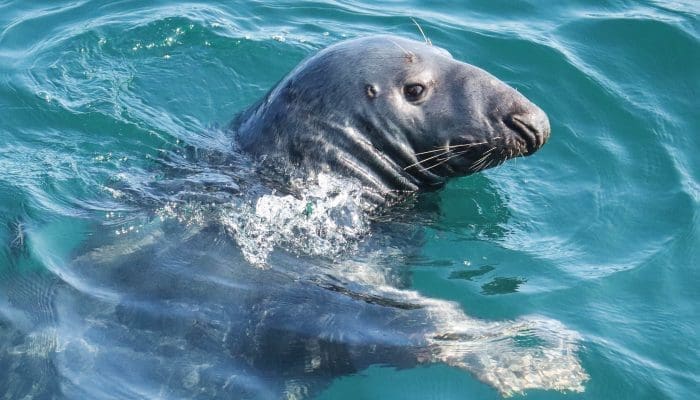
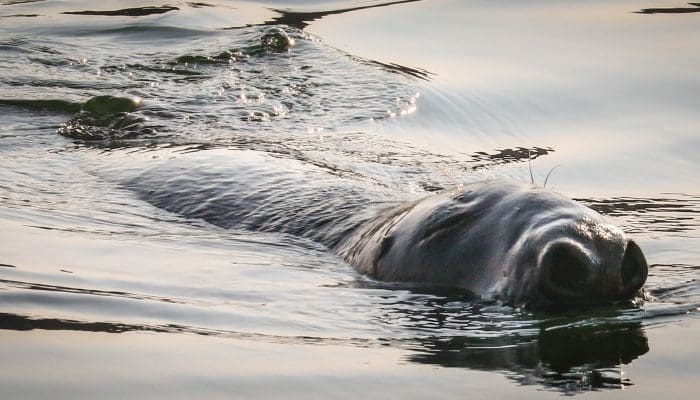
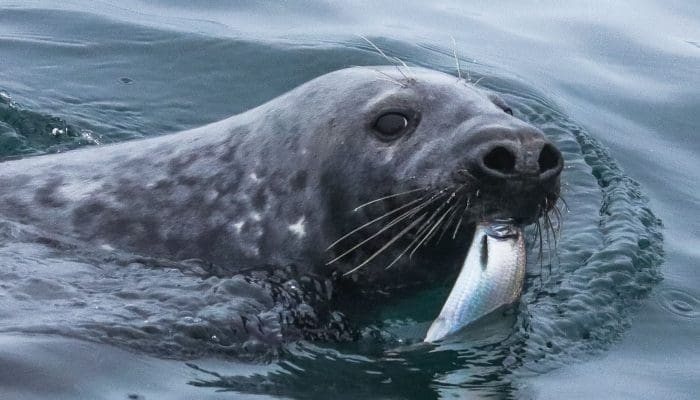
Horse-shaped head profile
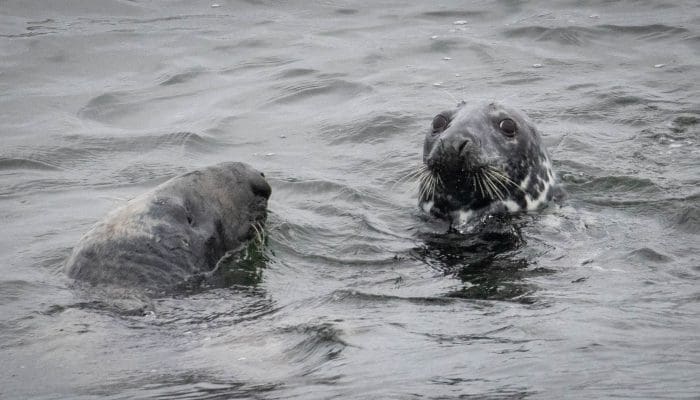
Males larger than females
Breed on remote beaches
Thick blubber layer
Gray seals are very large animals, with males reaching lengths of over 8.5 feet and weighing up to 770 pounds. Females are smaller, growing to lengths of 6.5 feet and weighing up to 440 pounds. Female gray seals typically have silver-gray to brown fur, often marked with dark spots. Males are generally darker, ranging from gray to brown, and may have scattered spotting. Males also have longer, more pronounced noses than females.
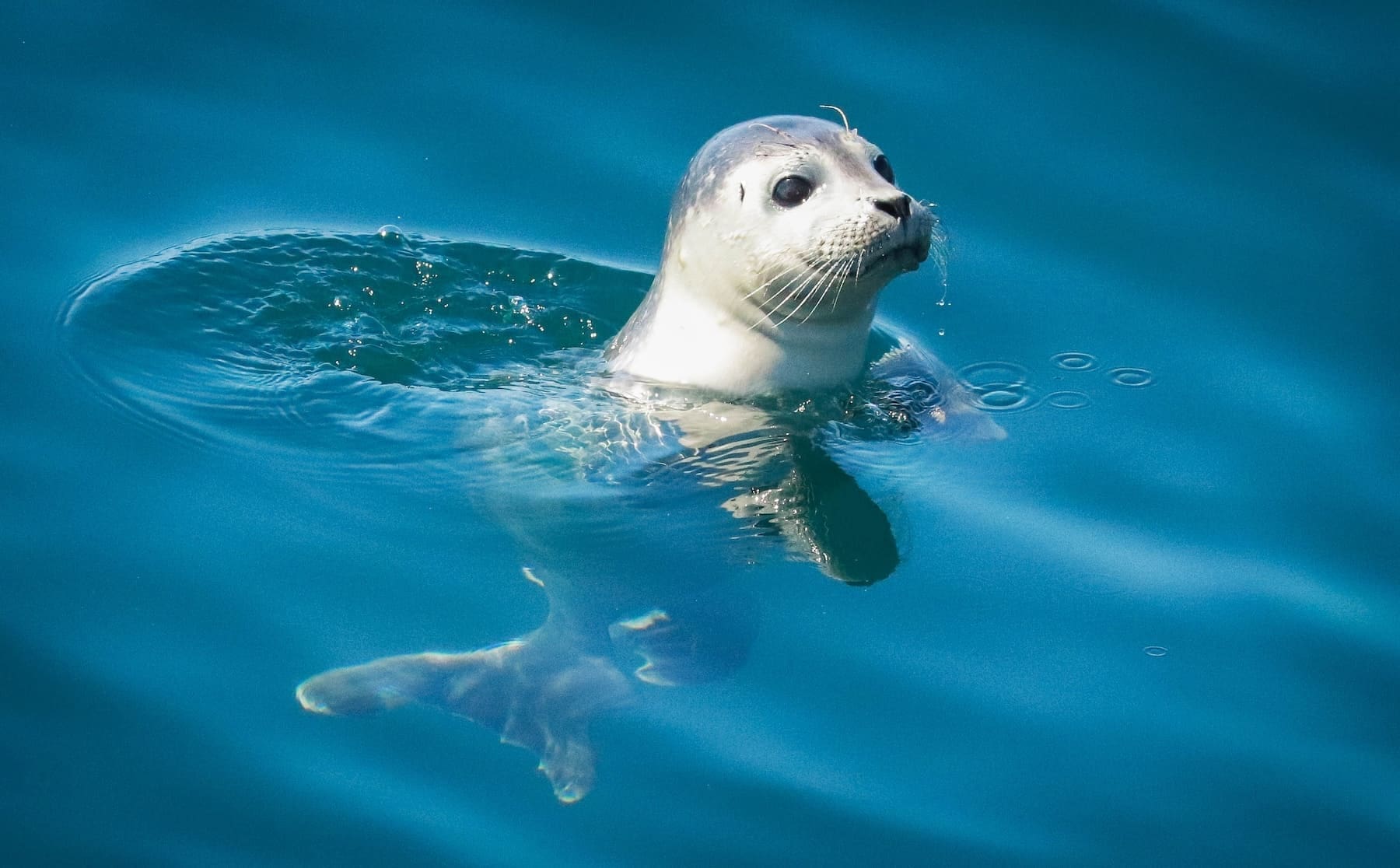
Gray seals can be told from the more common Harbor seal by their larger size and the flat, somewhat “horse-headed” appearance. Harbor seals, by comparison, have a concave shape to their foreheads.