Atlantic Bluefin Tuna
Thunnus thynnus
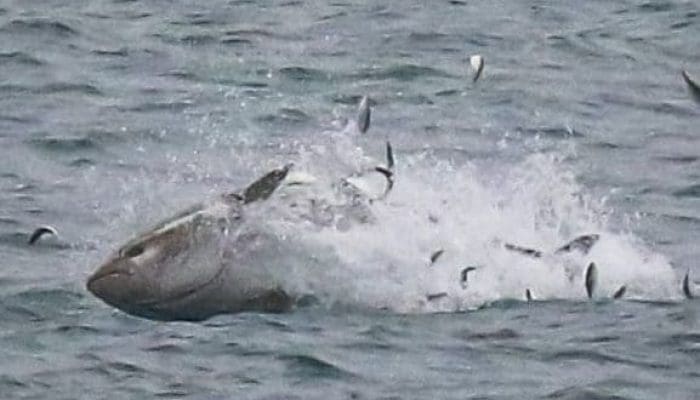
Atlantic bluefin tuna are found in our area from July through October. Schools of hundreds, even thousands, are sometimes seen breaking the surface and the splashing they create can fool even an experienced whale watcher into thinking they’ve just spotted a pod of dolphins! These large schools of Bluefins usually consist of smaller, juvenile fish that are sometimes referred to as “footballs” because of their small size and football-like shape.
Quick Facts & Stats
Powerful, warm-bodied fish
Speeds over 40 mph
Highly migratory Atlantic species
Valuable commercial species
Adult Bluefin tuna can grow to enormous sizes, reaching lengths of over 10 feet and exceeding 1,400 pounds in weight.
Bluefin tuna are a prized game fish and a valuable commercial species. The record price for a single Bluefin tuna was $1.8 million for a 489-pound fish sold at a Tokyo market in the winter of 2013.
Conservation of the Bluefin tuna (both the Atlantic and Pacific populations) is a complicated and contentious issue that is, quite frankly, beyond the scope this webpage. I do invite you to do some research on your own, however, as I feel that this is an important issue that will act as “canary in the coal mine” for how we value and manage natural resources in the sea and, more importantly, how willing and able we are as a species to work across cultural, political, economic, and geographic boundaries to practice sound conservation of wild animals and ecosystems. What I will say is this: Until the people fishing for Atlantic bluefin tuna in the eastern Atlantic and the Mediterranean begin to fish in a more responsible way (for example the way fishermen here in the western Atlantic do with strict quotas and minimum size limits) the future of this species is bleak.