Basking Shark
Cetorhinus maximus
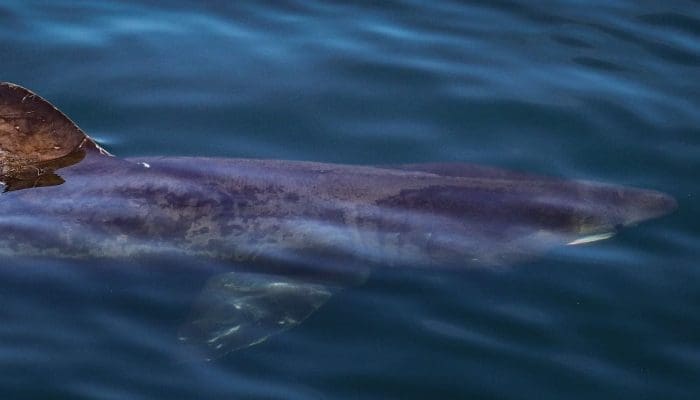
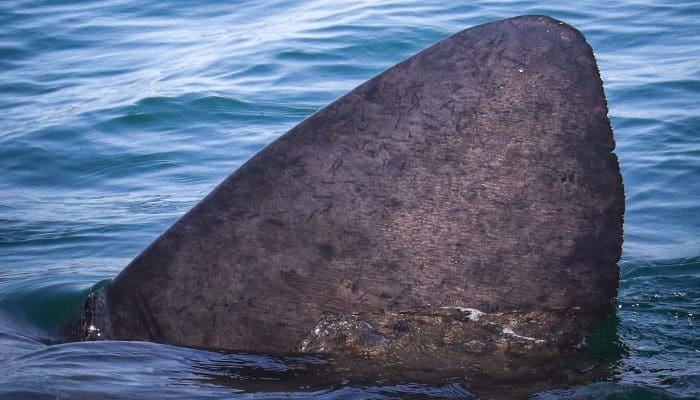
Basking sharks are frequent visitors to our area from the late Spring through the Fall, and they are seen on many of our whale watching trips. They received their name because they are often seen swimming lazily along at the surface and seem to be “basking” in the sun (although they are actually feeding).
They are the second largest fish in the world (second in size only to the Whale shark) and some Basking sharks can be as large as some of the whales we see! The largest Basking shark on record was a female accidentally caught in a fishing net in the Bay of Fundy that was a whopping 40 feet, 3 inches long and weighed 38,000 pounds! The typical adult Basking shark, however, is not quite that big. The “baskers” we see are normally 20-25 feet long and about 5 tons or about 10,000 pounds… that’s still a pretty big shark!
Quick Facts & Stats
Second-largest fish species
Filter-feeds on plankton
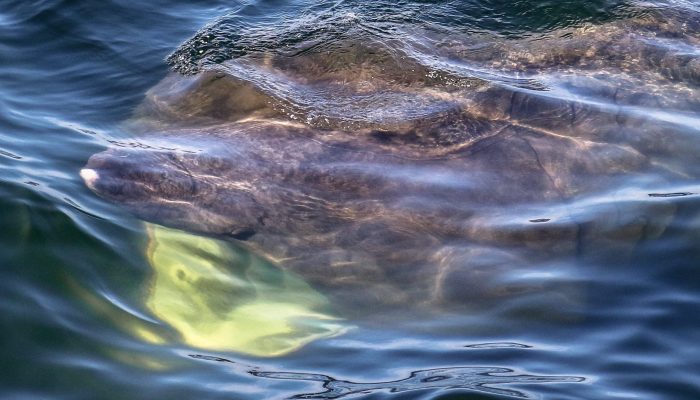
Massive gaping mouth
Slow-moving giant
Despite their large size and somewhat menacing appearance, Basking sharks are actually quite harmless. The do have teeth, thousands of them in fact, but they are very small and feel more like sand paper to the touch. Actually, Basking sharks don’t even use their teeth when feeding. This is because Basking Sharks are “filter feeders” like the Whale shark and Megamouth shark. When feeding a Basking shark swims slowly along with its mouth open letting water flow in through the mouth and out through the gills. As the water passes over the gills any zooplankton (ie fish eggs, crab or lobster larvae, copepods, etc) that are present in the water get caught on specially designed “gill rakers” which are long, cartilaginous structures (kind of like the teeth of a comb) that protrude from the shark’s gills. Using this feeding method Basking sharks are able to filter up to 2,000 tons of water per hour and can consume over 1,000 pounds of plankton a day!